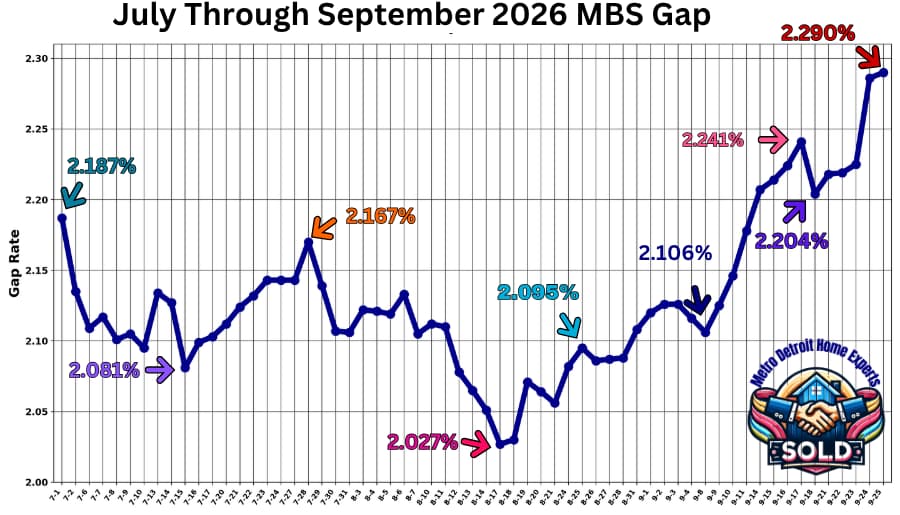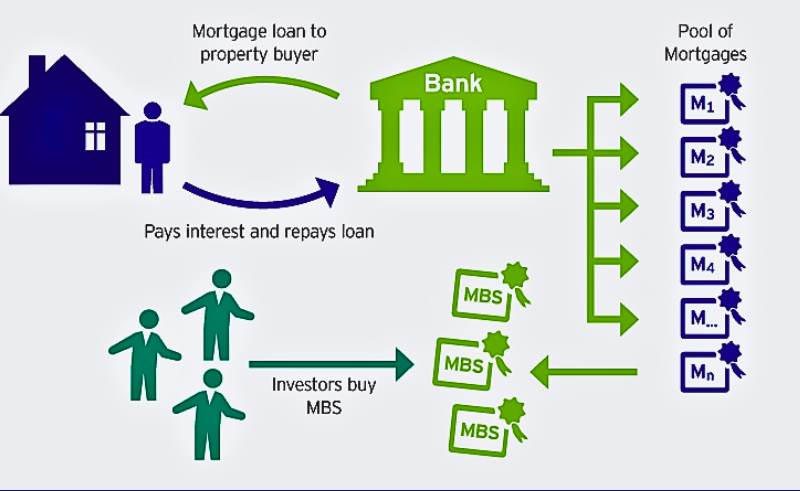
The Truth Behind the Mortgage Rate Noise: 📢
 The Mortgage Market is Volatile and Fragile. Rates can flip to a spike quickly.
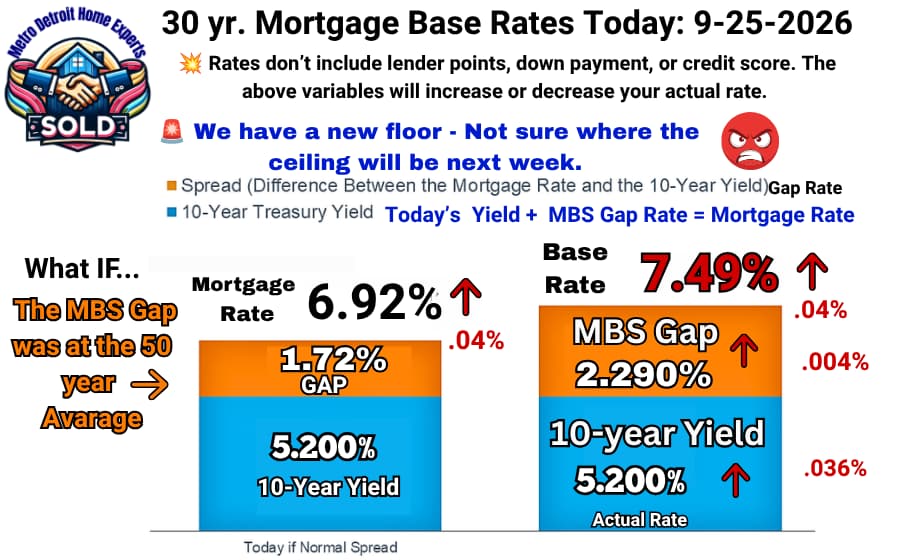
Updated: 9-25-2026 at 12:50 PM EST
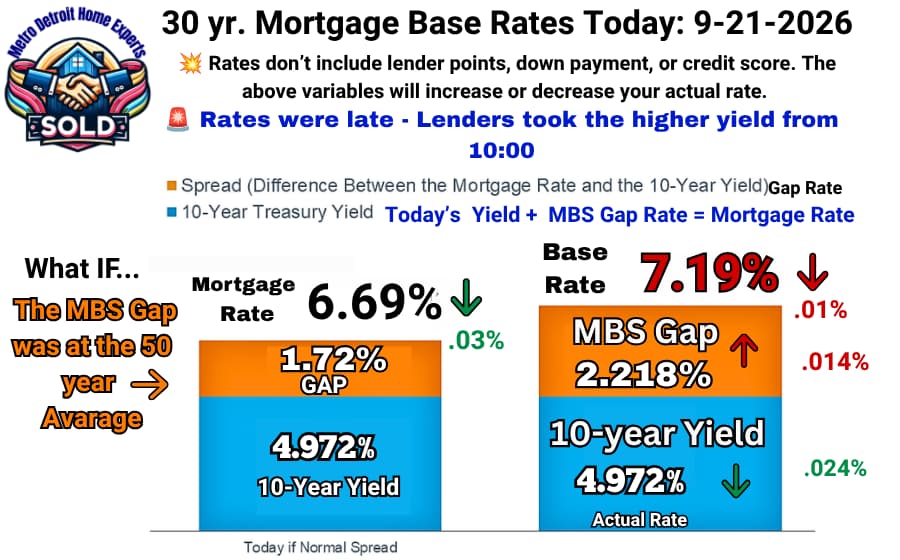
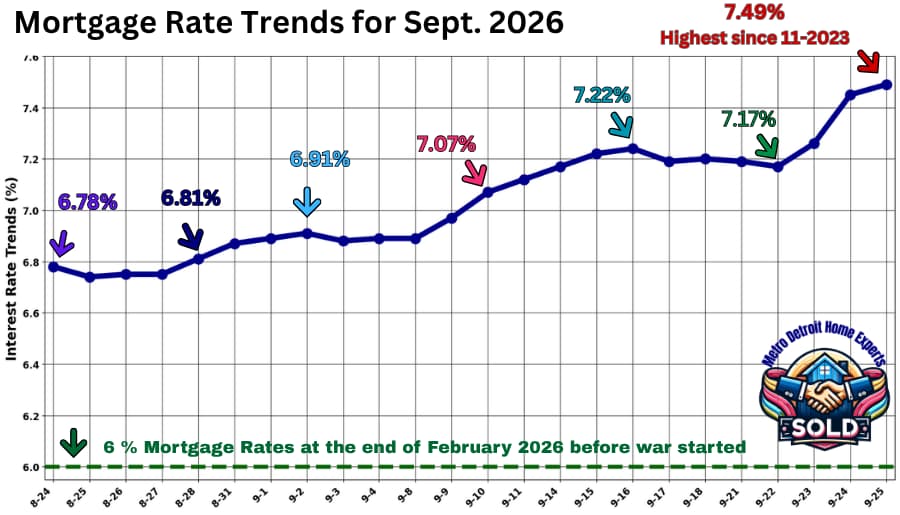
Let’s Crack the Mortgage Rate Code and Save Your Deep Dive – Updated daily 9-25-2026 🚀 YOUR WHY rates spiked!

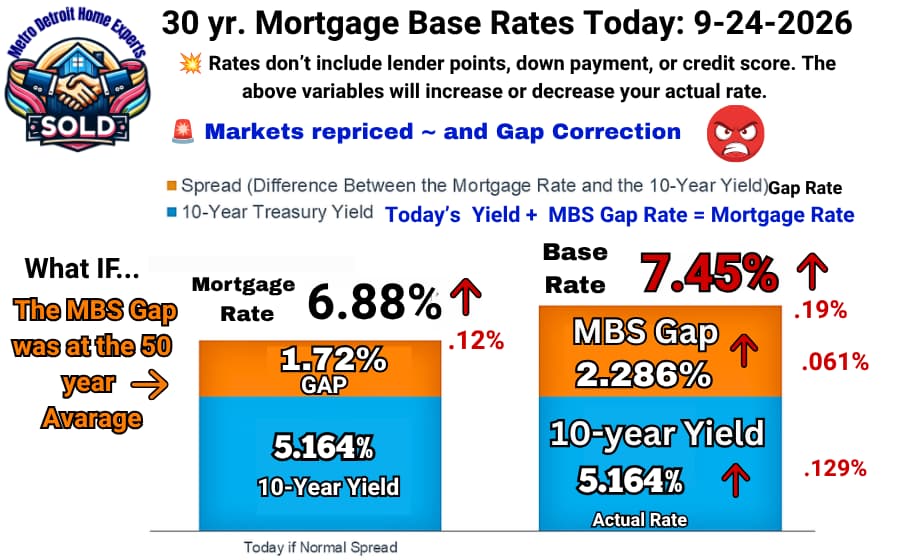
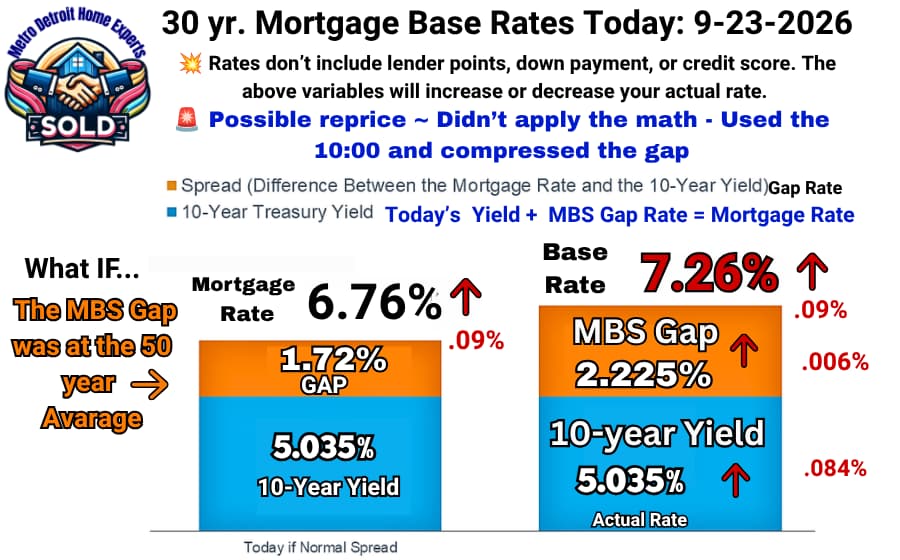
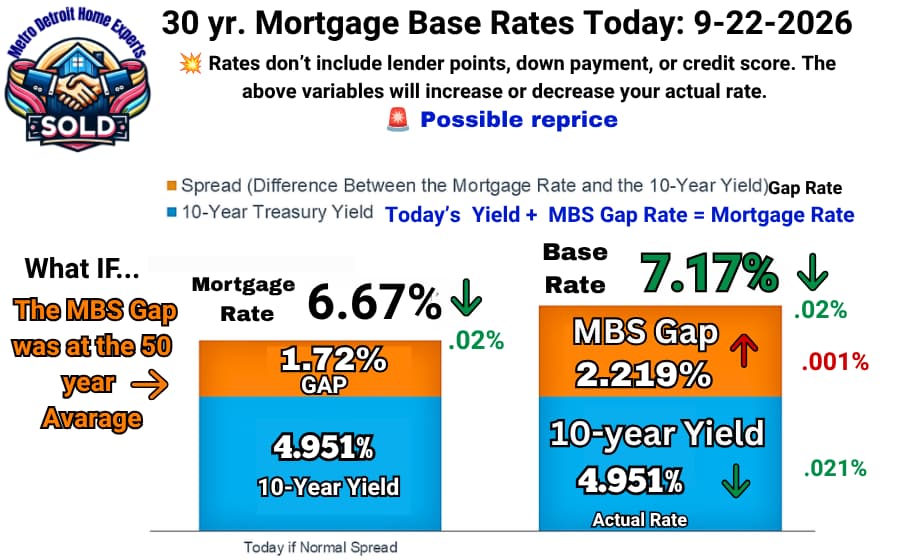
Due to the complexity and volatility, mortgage rates are updated in two separate blog posts. The patterns and trends for when we could see SPIKE and DIP headlines start here. Let’s Crack the Mortgage Rate Code and Save Updated Daily . Mortgage rates don’t move on headlines alone. By tracking bond market behavior, MBS gap shifts, and lender pricing trends, you’ll know when rates may stabilize and when risk is building.
  Understanding the WHY behind rate movements gives you something most buyers never have—Clarity. Confidence. And no costly surprises. Over time, you’ll recognize the repeatable patterns — and learn to time your mortgage rate lock so you’re always aiming for a dip, not a spike. That’s not luck. That’s strategy.
- Bookmark: Today’s Mortgage Rates — Dip and Spike Alerts — 5-day formula trends – Learn to predict
- Want exclusive alerts? Subscribe to our newsletter and never miss a move.
- Bookmark: Crack the Mortgage Rate Code and Save — track where we were and where we’re heading moving into the next. This is where you will find upcoming Bond Auction and Economic reports that affect mortgage rates.
 Bookmark:
  — 5-day formula trends – Learn to predict
 Want exclusive alerts?
 Step # 1: WHY the Yo-Yo Effect of the Yield — and Mortgage Rates Will Follow 📈
To learn the formula, track daily trends, and what question to ask your lender, visit Crack the Mortgage Rate Code and Save💰: What’s driving the change. Here we take a deeper dive into the WHY. I’ve been predicting the perfect storm, and I’m sad to report it is now here. The bond market is reacting to The Stack — not inflation alone. Read more below — “What My Crystal Ball is Telling Me” ⤵️ Until we tackle the stack, mortgage rates won’t return to 6%.
🚨 How to track what affects Mortgage Rates⚠️Spikes and Dips
Start with following⭐ I’ve been following the crumbs for months. You can’t follow the headlines or the politics; you follow the simple mechanics and math to predict outcomes. If you raise tariffs → prices go up. If prices go up → inflation rises. If inflation rises → rates rise. If rates rise → yields rise. If yields rise → mortgages explode. If mortgages explode → housing freezes. If housing freezes → the economy slows. The gentlemen below, Dimon, Warsh, and Druckenmiller, all have the same skill set: See the pattern → understand the mechanics behind it → test it against the math.
Today’s Mortgage Rate blow-out stack – The Perfect storm🌩️
- Why the Bond Market Exploded💥 and mortgage rates will follow!
- The warning signs have been here for 18 months. Now experts are starting to worry!
- Why Mortgage-Backed Securities Bonds are ready to Snap!
- The mayhem of the 10-year Treasury bonds and mortgage rates
- The Four Horsemen of the Apocalypse are coming for the Global Economy: – rising yields – rising deficits – rising interest payments – rising issuance – rising geopolitical risk – rising energy inflation – rising term premium – rising mortgage rates
- The bond market has a supply problem pushing up mortgage rates!
- Yesterday, bond yields around the world soared 🚨dangerous
- Jamie Dimon won’t buy long-term Treasury bonds right now, including the 10-year Treasury.
- JPMorgan warns Bessent’s Treasury bond fix could backfire, and so far it has.
- Jamie Dimon’s global warning: long-term Treasuries are unsafe!
- Billionaire Stan Druckenmiller is right about the bond market, and the Federal Reserve knows it!
- The Struggle between the US Treasury and the Federal Reserve could backfire!
- Affordability? Trump’s foreign policy is driving up interest rates. (mechanical, not political)
- Bond market reacting to Treasury Policies and Rate Spike: ” It’s the Debt, Stupid”
Why Did the Mortgage Rate Spike
🌩️Mortgage Rates are back to the perfect financial storm. ⬆️September is going to get DICEY and affect possible interest rates as well as mortgage rates. The markets are reacting early to the Treasury announcement of long-term debt buyback, and that has caused major blowback in the bond market. Now, Trump’s bully speech at the UN and the politics have collided with the mechanics, and the math has won. Bond vigilantes are done with the politics…Congress: “Get your House In Order”
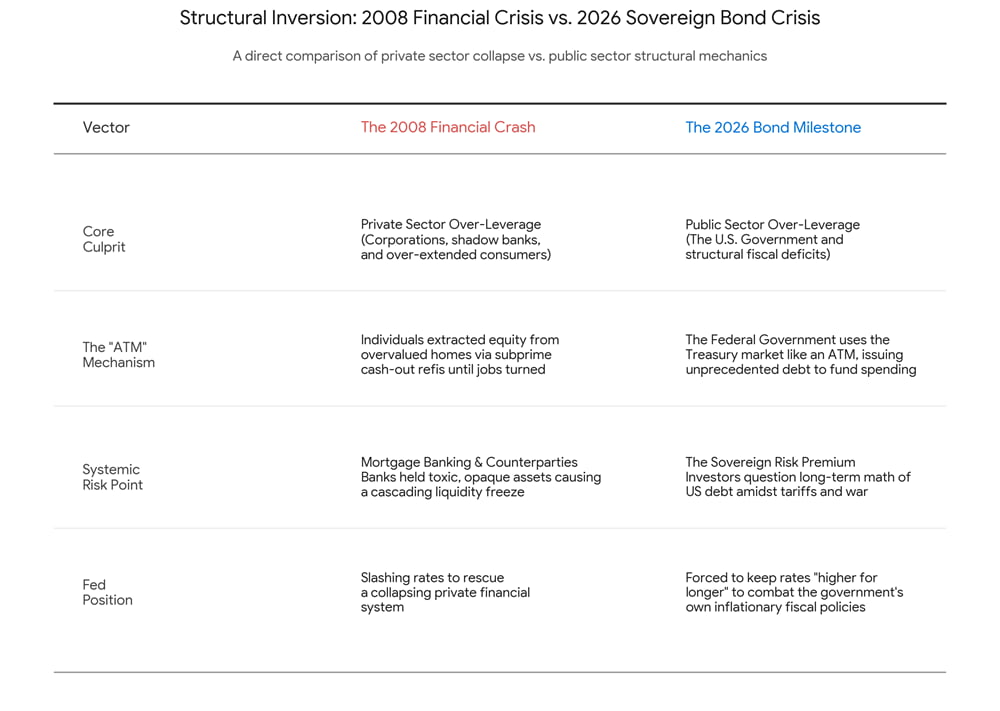
Why the Bond Market is so volatile and mortgage rates spiked 🔍
Geopolitics → GDP slowdown → Fed hesitation → term premium explosion → auction stress → fiscal uncertainty → yields spike to 4.700% and higher.
- Strait of Hormuz: Is disruption getting better or worse?
- Oil prices: Does energy pressure become lasting inflation?
- Fed plumbing: Does the new direction restore confidence in how risk, liquidity, and Treasury demand are handled?
- Treasury auctions: Are investors still willing to absorb the debt without demanding sharply higher yields?
- Bond Market flipped to a new Regime.
3. Ongoing White House Policies and Inflation: From a market‑mechanics standpoint, current White House policy signals are adding upward pressure to inflation by increasing uncertainty around trade, regulatory direction, and price stability, and now more tariffs. Now Canada’s 50% tariffs, and that increase will be passed on to the consumer. This also affects cars and car parts. When policy shifts are abrupt, reactive, or communicated inconsistently, businesses raise prices defensively, supply chains tighten, and investors demand higher yields to compensate for policy risk. The result is inflation that becomes harder to contain because the policy environment itself is contributing to volatility rather than anchoring expectations. The risk is now “stagflationary grind,” not a classic recession.
4. Treasury Supply and Deficit Concerns Are Pushing Yields Higher: This is not political commentary. This is bond math. When deficits rise, the Treasury goes to the market to finance the debt. When the supply of government debt is high, investors demand more. A higher coupon. Larger term premium. Compensation for fiscal uncertainty. This is not inflation driving yields higher. Foreign investors have backed away, and dealers were forced to eat the leftovers starting in April 2025.
5. Federal Reserve chair is changing the plumbing: What you know is this: the current system has been heavily reactive, the Fed’s balance sheet still matters, and any effort to change the plumbing will show up first in the Treasury market, auction demand, yields, and mortgage-backed securities.
6. FHFA/GSEs: Tried to hide the problem by compressing the gap, driving mortgage rates lower. This is political distortion of a mechanical market, and the math won!
7. Then came the rocket launcher and Congress did nothing: The spike was mechanical and predictable, and the bond market and the Feds have been warning the West Wing for 18 months. Congress made it worse by doing nothing, and when the politics heated up, they left town again and won’t return until after the midterms. ✔️left in July✔️came back in September✔️passed a gap bill✔️left again✔️no deficit plan✔️no tariff replacement✔️no BBB correction✔️no war funding plan✔️no issuance reduction
8. This is how you get the bond market snap: 💥Treasury kept coming to market with huge debt for months💥auctions kept weakening💥yields kept rising for months💥volatility kept rising💥10-year Treasury bond hasn’t been this high since 2007 – warning of what to come!
9. Here is the Math for Tariff Revenue, war spending, and Treasury yield: The numbers show how quickly the fiscal picture changed. Tariff Revenue:
Projected tariff revenue: $400B+
Collected before the SCOTUS ruling: ~$180B
Refunds after the ruling: ~$170B
Net revenue: ~$10B
That leaves roughly a $390B revenue shortfall compared with the original projection. The BBB budget was built around approximately $400B in tariff revenue. Spending remained in place, but most of that expected revenue disappeared.
Add the Iran War: Estimated war spending: $120B–$180B💥Using the midpoint of $150B: $390B tariff shortfall + $150B war spending = ~$540B in additional fiscal pressure + additional spending.
Treasury has to finance the Gap by selling debt in the bond market, thereby borrowing. Estimated additional issuance: ~$600B–$700B, and this is where it reaches interest rates. More Treasury supply + weaker demand = higher yields. Long-term Treasury yields are driven by expected short-term rates + term premium. The term premium can rise when deficits grow, Treasury issuance increases, investor demand weakens, fiscal uncertainty increases, or investors demand more compensation to hold long-term government debt. During this period:
10-year Treasury yield: ~4.0% → ~5.0%
Term premium increase: ~0.80–1.00%
The chain is straightforward: Tariff revenue falls → deficit grows → war adds spending → Treasury borrowing rises → bond supply increases → yields face upward pressure → mortgage rates face upward pressure. You see, politics has just collided with the mechanics and math, and the math won!
Bottomline:
Congress never met and adjusted their BBB projected $400b in tariffs. On February 20, the CBO budget office told Congress that eliminating the tariffs projection and actual would mean a $1.6T increase in primary deficits. By July, replacement tariffs recovered only part of the lost revenue and raised its FY-2026 deficit estimate from $1.9T to $2.1T. Then came the war, and on August 1, the CBO budget office estimated $38B in defense costs, with another $2-3B per month depending on the intensity of the operations. By August, the federal government had accumulated roughly a $2.0T deficit. That’s why mortgage rates could continue to climb, and the Federal Reserve may have to continue increasing mortgage rates. Want someone to blame? Then blame Congress for not doing their job; they decided to leave town instead. This isn’t about politics. It’s about what happens when political decisions collide with financial-market mechanics. The bond market doesn’t vote. It prices risk, supply, demand, revenue, spending, and debt. That is why your bond-market monitoring matters. You will see the shift in the data before most headlines explain it.